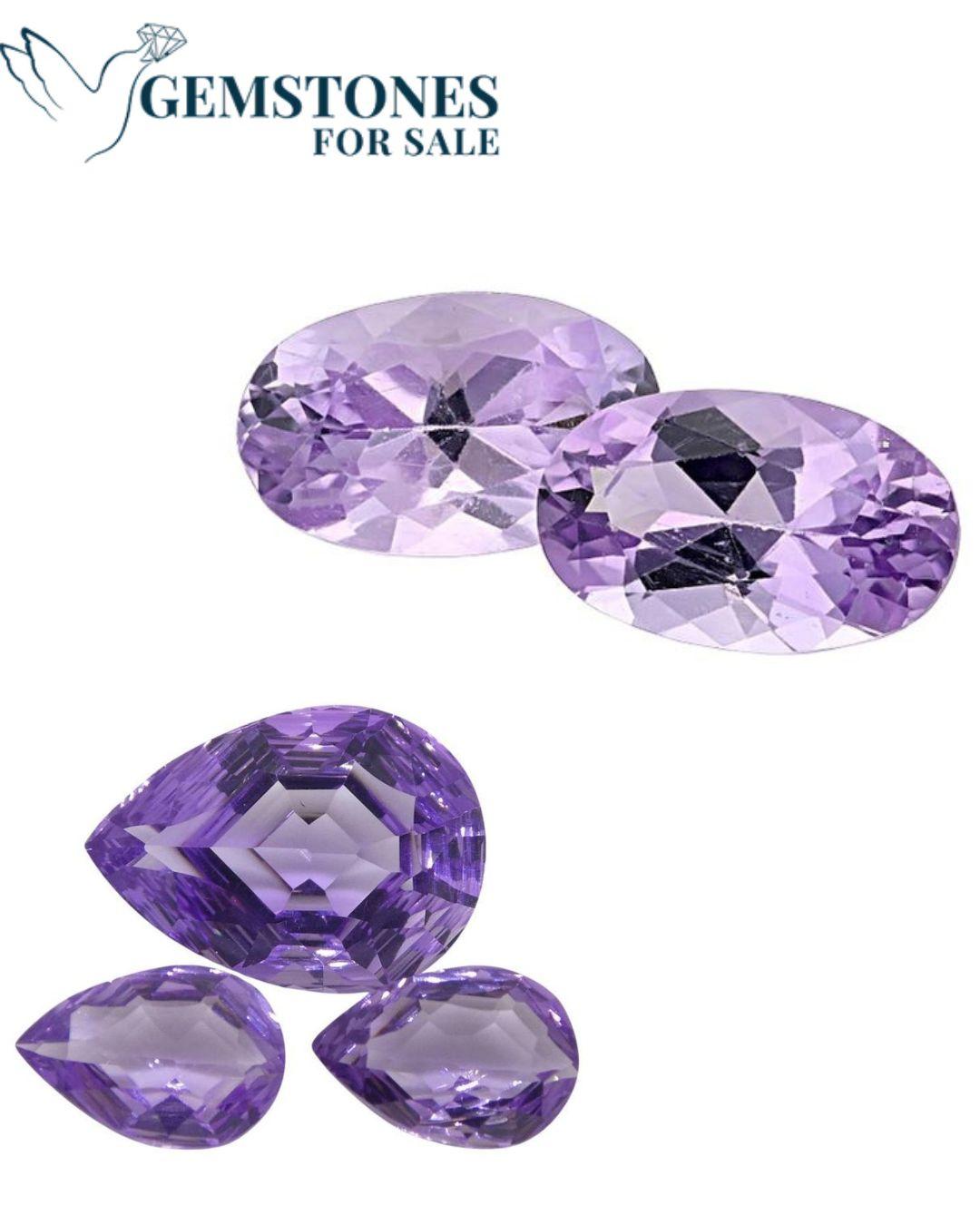
If you’ve fallen for the amethyst stone, we totally get you. From its purple color to the way it shines, every feature of this gemstone is worth a watch (though it’s impossible to shift your gaze from it). And if you’re thinking of exploring amethyst gemstones for sale, then let us tell you that their outer beauty is just the tip of the iceberg. As a buyer, there are many things to discover about this gemstone. If you’re already feeling curious, then you’re in for a treat. In this blog, we’re going to shed light on everything you should know about this purple crystal.
What to Know Before Buying Amethyst
Let’s start with the basics first. Amethyst belongs to the quartz family. We’d bet you didn’t know that it gets the stunning purple shades from the presence of iron and other trace elements.
When shopping, you’ll come across many options, such as raw clusters, polished cabochons, geodes, and beads, which are just a few of the many forms. It’s also essential to know that the stone price can vary widely depending on clarity, origin, and size. High-quality pieces have a rich, even purple tone without too many visible inclusions.
Apart from that, the natural stones are expensive compared to the synthetic and glass fake ones. As a buyer, you should always remember a mark of color identification usually present in an authentic amethyst, which is that the crystal will always have inconsistent hues throughout the surface with color zoning present in some varieties. If the color is too uniform, then it’s a big red flag!
If you’re planning to buy amethyst online, make sure you choose a reliable store that provides real pictures, proper descriptions, and certifications. Also, keep in mind your purpose. Some people look for amethyst for jewelry, while others want it for meditation or home decor.
What We’d Recommend:
Not all sellers offer genuine stones. Hence, if you want to buy natural gemstones online, then be aware of synthetic or dyed versions. Real amethyst is cool to the touch and typically shows a hardness of 7 on the Mohs scale, which gives it decent scratch resistance.
Where to Buy: Choosing a Trustworthy Source
Now that you know the basics, the next question is where to buy from. It’s tempting to grab something from just any site, especially if it looks pretty in pictures. But many mass-market platforms sell dyed quartz or glass as amethyst.
This is where it helps to buy from shops that specialize in natural stones. You’ll want to look for transparency, certifications, and customer reviews. One good tip is to go through leading platforms that offer gemstones wholesale, especially if you’re looking to buy in bulk or want a better price.
The best place to buy amethyst crystals is one that includes detailed specs about the stone’s origin, treatments (if any), and clear photos under natural light.
Also, don’t hesitate to ask questions. Good sellers won’t mind explaining whether the amethyst is heat-treated, where it’s mined from, or if the color might fade in sunlight. The more open they are, the better.
Compare with Other Stones to Understand Value
One of the most important things to know before buying amethyst is the varying prices. That’s where comparing it with other popular crystals can give you clarity. For example, if you’re also planning to buy moonstone online, you’ll notice that this gemstone has its own range of pricing depending on clarity and flash.
By exploring a few different stones side-by-side, you’ll start to develop a feel for quality. Amethyst that’s too cheap is often too good to be true. It may be dyed or not amethyst at all. Real amethyst has a natural feel, slight imperfections, and a depth of color that isn’t uniform like colored glass.
Moonstone, like amethyst, is also sensitive to care. So, as you compare, also check how to care for your stones and what works best for your lifestyle. Both make stunning jewelry stones, but knowing how they react to sunlight, water, and scratches can help you make smarter decisions.
Amethyst Crystal Buying Guide
Here are some of the main things to check before you buy:
- Color: The ideal amethyst color is a deep, even purple. It should neither be too pale nor too dark. Some stones even show hints of red or blue flashes, which are highly valued.
- Clarity: A high-quality amethyst will be fairly clear without too many inclusions or cracks. That doesn’t mean inclusions are bad, but they’re natural. However, having too many inclusions can impact the appearance.
- Cut: Whether raw or polished, the cut should enhance the stone’s natural beauty. Cabochons, spheres, and faceted cuts are popular depending on use.
- Origin: Amethysts from Uruguay, Brazil, and Zambia are highly valued and are popular for their intense color. Zambian amethysts tend to be darker, while Brazilian ones are lighter with better transparency.
- Size and Weight: Heavier stones usually cost more, but it’s also about proportion. A well-cut small stone can look far more beautiful than a large dull one.
Go With the Stone That Your Eyes Love
This might sound a bit abstract, but it works, especially with crystals. When browsing different amethysts, you might feel drawn to one particular piece. Maybe it’s the color, the shape, or even the pattern of inclusions inside.
Many crystal lovers believe that the right stone will “speak to you.” So, if you’re choosing between two stones and one just feels more “right,” that’s probably your crystal.
Intuition plays a big role in choosing crystals for healing. If you’re using amethyst for calm, protection, or dream work, your instincts will often guide you toward the stone that best suits your energy.