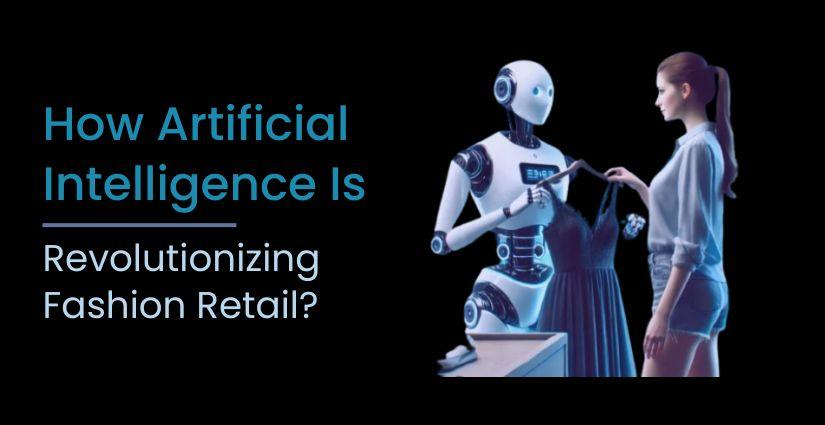
Fashion retail businesses operate their operations through three primary factors, which include creative development, emerging fashion trends, and consumer purchasing patterns. But in recent years, a new force has begun reshaping how fashion brands design, produce, market, and sell their products—artificial intelligence (AI).
The fashion retail industry considers artificial intelligence as its main technology used for business operations. AI enables fashion brands to achieve better business results through its applications, which include personalized shopping, demand forecasting, virtual try-ons, and supply chain optimization. The fashion industry relies on AI technology because it creates a strong competitive edge through its ability to increase operational efficiency and maintain market relevance.
The Growing Role of AI in Fashion Retail
Fashion retail operates in a highly dynamic environment that experiences continuous trend changes and ongoing customer expectation shifts. Traditional decision-making methods use historical sales data and intuition as their primary sources ,which results in two outcomes: overstocking and failure to identify current trends and delayed responses to market shifts.
AI changes this by analyzing vast amounts of data in real time. Retailers can now use AI to study consumer patterns, forecast upcoming trends, and streamline their business operations with unmatched precision. This system provides fashion brands with two advantages because they can fulfill market demands faster while their operational waste and inefficiencies decrease.
Personalized Shopping Experiences at Scale
The primary way AI affects fashion retail today shows through its ability to create personalized shopping experiences for customers. Modern consumers expect tailored experiences, whether they are shopping online or in-store. AI-powered recommendation engines use customer browsing patterns and their shopping history, their product preferences, and their social media activity to determine which products match their individual tastes. The system uses real-time data to develop product recommendations that extend beyond the basic “customers who bought this also bought that” standard.
Personalization creates better customer experiences because it helps customers find suitable clothing options more quickly while they shop. Businesses can boost their average order value through personalized product recommendations, which establish exclusive customer selections. Customers develop brand loyalty because they receive personalized experiences from the company. Fashion retailers use AI to deliver personalized experiences, which help them build strong customer relationships with their entire customer base.
AI-Driven Trend Forecasting and Design
Fashion trends are known for their impossible nature to forecast. AI uses data to enhance trend prediction accuracy through its analysis of multiple sources, which include social media, search engines, fashion shows, influencer content, and historical sales patterns. AI systems can identify emerging colors, silhouettes, fabrics, and styles before they go mainstream.
The insights provide designers and merchandisers with tools to make collection decisions while eliminating the need for speculation. In some cases, AI is even assisting in the design process itself—generating pattern ideas, color combinations, or style variations that designers can refine. The partnership between human artistic expression and machine learning capabilities brings faster progress to new ideas while protecting the creative vision.
Virtual Try-Ons and Visual Search
The main problem that fashion retailers encounter during online shopping revolves around their need to give customers tools that will show them how products will appear when worn. AI-powered virtual try-on solutions use computer vision and augmented reality to address this problem. Customers can:
- Try clothes virtually using smartphone cameras
- See how accessories or makeup look in real time
- Use visual search to find similar items by uploading images
The shopping experience improves because these features enable customers to make better purchasing decisions, which results in fewer product returns. Virtual experiences are becoming more authentic and easier to use because of technological advancements.
Smarter Inventory and Demand Forecasting
AI in retail face persistent problems because they cannot manage their inventory correctly. Businesses face two major inventory problems because excess inventory forces them to decrease prices and pay for item disposal, while insufficient stock prevents them from making sales.
The AI-based demand forecasting system uses historical sales records, seasonal patterns, promotional activities, weather data, and regional consumer buying habits to create better product demand estimates. Retailers can optimize their inventory levels across all retail locations and storage facilities to guarantee proper product availability at appropriate times.
Dynamic Pricing and Promotions
The fashion retail industry experiences complicated pricing processes because it must consider multiple factors, which include current fashion trends, seasonal changes, existing market competition, and consumer purchasing patterns. AI technology allows businesses to implement dynamic pricing systems, which change their product prices automatically according to current market conditions.
AI systems use demand changes, competitor price information, and customer purchasing patterns to determine the best pricing and promotion methods. The system provides businesses with a competitive edge while maintaining their profit margins.
Consumers receive offers that match their preferences and discounts that arrive at appropriate times. Retailers benefit from enhanced revenue control and decreased need for universal price reductions.
Enhancing In-Store Experiences With AI
AI technology extends beyond online shopping because it now changes how physical retail stores operate. The in-store experience receives improvements through the use of smart mirrors, AI-powered kiosks, and computer vision systems.
The technologies provide these capabilities:
- The systems recommend matching products to customers who use fitting rooms
- The systems monitor customer movement patterns through different store areas
- The technology uses shopper behavior data to create optimal store layout designs
- The technology allows customers to complete purchases without requiring cashiers to assist them
Artificial Intelligence development company develops seamless omnichannel shopping experiences through their digital systems, which merge with their physical retail environments to meet the needs of contemporary customers.
Improving Supply Chain Efficiency
The fashion industry operates through worldwide supply chains, which require multiple suppliers, together with manufacturers and logistics partners, to function. AI helps retailers gain better visibility and control over these operations.
The AI-powered systems enable users to perform three essential functions, which include supply chain disruption prediction, production schedule optimization, demand-supply alignment improvement, and image recognition quality control enhancement.
Through improved forecasting and better coordination, brands achieve shorter lead times and faster trend response times while decreasing operational risk.
AI and Sustainability in Fashion Retail
Sustainability has become an essential requirement for consumers and brands. AI helps organizations achieve sustainability goals through its capacity to enhance environmentally friendly product creation and resource usage practices. Companies use AI technology to enhance demand forecasting and inventory management, which leads to decreased product excess and environmental waste. The system enables brands to track their material consumption, assess their ecological footprint, and discover possibilities for implementing sustainable fashion practices.
AI technology helps organizations become more efficient while enabling them to adopt environmentally responsible and morally sound fashion business methods.
Challenges and Ethical Considerations
The fashion industry faces multiple challenges, which include ethical concerns about its AI implementation. Fashion retail businesses face numerous difficulties when they adopt artificial intelligence technology despite its advantages. The three main considerations include data privacy issues, the presence of algorithmic bias, and the need for transparent systems.
Brands need to establish proper data handling procedures that protect user privacy while making sure they do not mistakenly create stereotypes or exclude specific segments of their customer base.
The successful establishment of AI systems depends on organizations having access to reliable data, which requires teams from different departments to work together throughout the process of developing and enhancing their models. Organizations should treat AI technology as a long-term asset that requires time to develop instead of using it for immediate results.
The Future of AI in Fashion Retail
Fashion retail will experience growth in AI technologies through their ongoing development. The future will bring multiple advancements, which include voice commerce, hyper-personalization, predictive styling, and fully automated supply chains. The most successful fashion brands will be those that combine AI-driven intelligence with human creativity and empathy. AI empowers designers and retail staff to improve their decision-making processes while delivering better customer experiences.
Conclusion
Artificial intelligence is revolutionizing fashion retail through its ability to change how brands understand their customers and run their businesses, and create value for their clients. Retailers now use AI to create intelligent shopping experiences, which include customized shopping solutions, trend prediction technologies, enhanced supply chain management, and sustainable practices. The fashion industry needs artificial intelligence because it delivers retailers the ability to adapt while providing them with essential business insights. For fashion retailers to succeed in the future, they must adopt AI technologies because these technologies will become essential for their operations.